
OCTAI Workshop 1.2 | Listening to Practitioners (India, Africa, Europe, and Americas)
Presenters
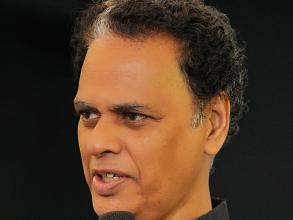
Dr. Achuthshankar S. Nair (Kerala University)
Achuthshankar S. Nair is the President of Sasthra Vedhi (a science organisation based in Kerala), and he was formerly Senior Professor of Computer Science and Head of the Dept of Bioinformatics, University of Kerala. He was also previously Director of C-DIT, Govt of Kerala, and a Teacher/Visiting Professor in South Korea, Japan, and Malaysia. He is the author of 20 books in English and Malayalam, numerous scholarly articles, and a number of research publications jointly with students.
Life is one of the most complex phenomena that unfolds on earth. Scientist attempt to study it from multiple windows, giving rise to a Bio-X portfolio (Bio-logy, Bio-chemistry, Bio-Physics and Bio-informatics. Bio-Technology works in the reverse direction, synthesis rather than analysis). Bioinformatics deals with understanding life through analysing the information stored in the nucleus of the cell in the form of DNA. Studies also include the sequence and structure of proteins, the workhorse molecules of life. For long, AI has been used in both of these studies. An excellent example is use of AI to predict genes in DNA sequences. Study of proteins require understanding of their structure which calls for sophisticated experimental analysis (X-ray crystallography or NMR). Today AI is being used to do it, an excellent example being the software Alpha-Fold. To understand life and also to create newer forms of life, AI is being used in Bioinformatics. This talk will briefly explain typical AI use in Bio-formatics.
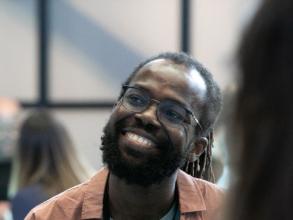
Emmanuel Klu (Google Research)
Emmanuel Klu is a research engineer at Google Research where he focuses on society-centered AI. His research topics include fairness, causality, robustness, systems thinking, reinforcement learning, scalable evaluations, knowledge graphs and AI for impact. His prior work includes data engineering and reliability engineering for large-scale systems. Emmanuel holds a bachelor's degree in Computer Science with a minor in Psychology from the Illinois Institute of Technology in Chicago.
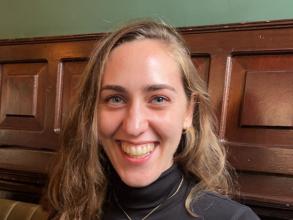
Louisa Conwill, Megan Levis, and Walter Scheirer (Notre Dame)
Louisa Conwill is a fourth-year PhD student in computer science and engineering at the University of Notre Dame. She studies how virtue ethics traditions including Catholic Social Teaching can inspire technology designs that promote more positive habits. A graduate of Brown University, Louisa worked as a software engineer for Amazon Alexa and served as a campus missionary with the Fellowship of Catholic University Students (FOCUS) before starting her graduate studies at Notre Dame.
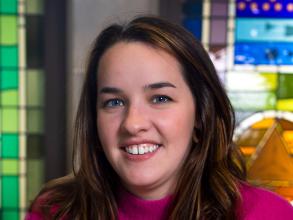
Megan Levis is an assistant professor of the practice with the University of Notre Dame's Institute for Social Concerns and College of Engineering. She holds a PhD in bioengineering and recently completed a postdoctoral fellowship with Notre Dame's Technology Ethics Center and the Department of Computer Science and Engineering. Her research interests relate to questions concerning how technology shapes the cultural understanding of what it means to be human and how technology can be designed to encourage virtue and the common good. Levis is also working to bring character formation into engineering curricula.
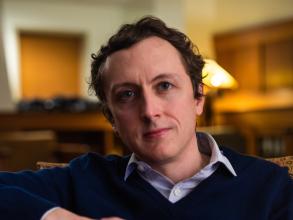
Walter Scheirer is the Dennis O. Doughty Collegiate Associate Professor in the Department of Computer Science and Engineering at the University of Notre Dame. He is a global technology leader, serving as the chair of the IEEE Computer Society Technical Community on Pattern Analysis and Machine Intelligence and as a board member of the Computer Vision Foundation. Scheirer is also a cultural critic and historian, commenting on the social context of emerging technologies from the realistic perspective of a technologist, and promoting technology development informed by Catholic Social Teaching that upholds the common good.
At its best, the internet channels the world into a global village of sorts, where digital citizens learn from each other, explore new modes of creation, and help others work through dilemmas in both physical and virtual spaces. We argue that the internet doesn't have to be the cultural wasteland of click-bait, partisan politics, and vulgar content that we see too often today. We draw from writing on virtue ethics and Catholic Social Teaching to demonstrate the potential goodness of technology. We will present a framework for designing technology to promote human flourishing based on eight of the main themes of Catholic Social Teaching and discuss how the framework applies to some of the technologies we use today.
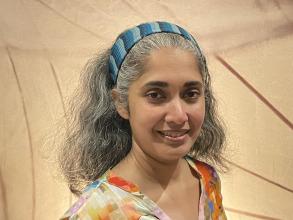
Prof. Jennifer George (Goldsmiths University)
Jennifer George is a Professor of Computing and is passionate about inclusion and accessibility and has championed Goldsmiths to improve student experience by being more disability inclusive. She was awarded a National Teaching Fellowship for her contribution. She served as Head of Computing until 2024 and taught and supervised students in various areas of human computer interaction. Jennifer's research areas include human-computer interaction, faith and belief in the digital world and inclusion and accessibility in learning, teaching and assessments. She has a keen interest in pedagogy and technology-enhanced learning and was previously academic lead for learning technologies and digital media at Anglia Ruskin University. Jennifer is also passionate about international partnerships and is always ready to explore ways of collaborating.
Prof. George has been a researcher with practical impact assistive technology for nearly 20 years. She has done extensive work removing barriers for learning and assessment in higher education for students and is currently working on a generative AI framework for the University. In this talk, she will be presenting the various aspects of this framework touching on specific challenges encountered by staff and students in the context of learning, teaching and assessments.

Daniel Wilson (xRI Global)
Daniel is the founder and CEO of XRI Global, a company committed to making AI accessible to speakers of every language. He has an MDiv in Biblical and Theological Studies, an MA and PhD in linguistics, and has led his company to build AI models for dozens of low-resource languages in over 25 countries. He lived abroad for 5 years in the Republic of Georgia and Russia and has extensive experience in linguistic documentation of endangered languages. Daniel is intimately aware of the multilingual complexity of the developing world and is passionate about bringing the energy and innovation of a technology company to solving this global infrastructure challenge.

Max Rimpel (General Catalyst)
Having grown up in a small village in Germany, Max has a deep appreciation for entrepreneurship. To this day, he believes it's the most powerful mechanism to bring about positive change. His drive "to see the world" ultimately led him to high school in the U.S., university in Berlin, advanced degrees in Paris and Madrid, internships in Japan and Brazil, stints at intergovernmental institutions and equity market research in the U.S. He was intrigued how technology changed our lives and began his tech career at Google in London. He transitioned into venture capital, joining Index Ventures, just as Europe became a fertile ground for ambitious founders. At General Catalyst, he continues to focus on B2B investment opportunities, now across both New York and Europe, which are the two ecosystems he's most bullish about. Away from work, he loves any sport involving a racquet or paddle, is a passionate piano player of limited ability and supports organisations that take on big challenges, such as Human Rights Watch and Black Girls CODE.