OCTAI workshop 3: Oxford Oath
Workshop details
This invitation-only workshop will take place over two days in person at the University of Oxford. Participants will come from around the world, and will be provided with written materials in preparation for the two days of discussion. The workshop will produce a first version of the Oxford Oath, an ethical commitment for AI practitioners.
Participants
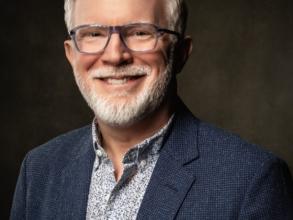
Prof Jeffery Bishop
Jeffrey P. Bishop is the Tenet Endowed Chair in Health Care Ethics, professor of philosophy and professor of theology at Saint Louis University. He holds an MD from the University of Texas and a PhD in philosophy from the University of Dallas. Bishop's scholarly work is focused on the historical, political, and philosophical conditions that underpin contemporary medical and scientific practices and theories. He has written on diverse topics from transhumanism and enhancement technologies to clinical ethics consultation and medical humanities. Dr Bishop is the author of The Anticipatory Corpse: Medicine, Power, and the Care of the Dying.
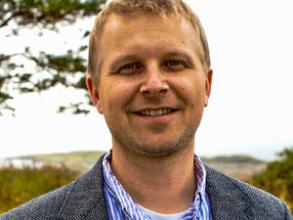
Dr Michael Burdett
Dr Michael Burdett is Associate Professor of Christian Theology at the University of Nottingham. He completed his DPhil in Theology at the University of Oxford, and worked in the aerospace and robotics industries for several years working with a firm that had contracts with NASA and JPL. He holds degrees in engineering, physics, and theology and has been given academic and professional awards in each field. He has been an advisor for the Church of England's Ethical Investment Advisory Group on AI and Big Tech and has helped lead grant projects totalling over ~£4 million on topics related to Christian theology, science and technology. He is a series editor for the Routledge Science and Religion series and his major works include Technology and the Rise of Transhumanism: Beyond Genetic Engineering (Grove, 2014), Eschatology and the Technological Future (Routledge, 2015) and Finding Ourselves After Darwin: Conversations about the Image of God, Original Sin, and the Problem of Evil (Baker Academic, 2018).
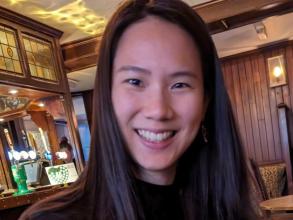
Jodie Chen
Chen, aka Jodie, is a Project Manager at the Science & Technology Law Institute of the Institute for Information Industry (III), a government think tank in Taiwan. She specializes in regulatory policy concerning artificial intelligence, data governance, unmanned vehicles, transportation and other emerging technologies. She holds an LLM from the London School of Economics and Political Science and a Master's in Law and Economics from Universität Hamburg. Her current work focuses on assisting the Ministry of Transportation and Communications in drafting sector-specific AI guidance and a risk-based AI governance framework. By combining regulatory analysis with stakeholder interviews, she seeks to identify risks in practice and design governance models that balance innovation with accountability. She is also a co-author of The 3H of AI Regulation - How to Regulate AI.
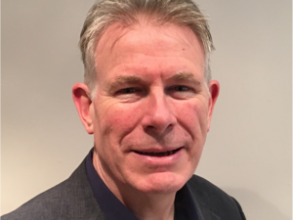
Prof Nigel Crook
Nigel Crook is Professor of AI and Robotics, Dean of Research and Innovation, and Director of the Centre for AI, Culture and Society at Oxford Brookes University. He graduated from Lancaster University with a BSc (hons) in Computing and Philosophy in 1982. He has a PhD in explainable intelligent machines and a Diploma in Biblical and Theological Studies awarded with Distinction from Wycliffe Hall, University of Oxford. He has nearly 40 years of experience as a lecturer and a researcher in AI. He is an expert reviewer for the European Commission and serves on several scientific committees for international conferences. His research interests include biologically inspired machine learning, social robotics and autonomous moral machines.
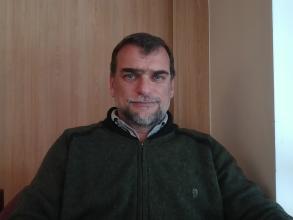
Prof Ignacio Del Carril
Ignacio Enrique del Carril is Associate Professor of Ethics at Universidad Austral and Universidad del Norte Santo Tomás de Aquino. He holds a Ph.D. in Philosophy from the University of Navarra (Spain) and degrees in Philosophy from the Pontifical Catholic University of Argentina. His research focuses on the ways in which classical philosophy can contribute to current debates in the philosophy of religion, science, and artificial intelligence. He has published in international peer-reviewed journals and presented his work at academic events in Latin America and Europe.
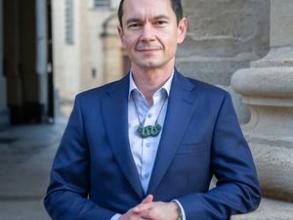
Dr Lyndon Drake
Dr Drake is a Research Fellow at the University of Oxford, following on from a DPhil in Theology from Oxford (2023), and a PhD in Artificial Intelligence from York (2005). He began theological study with a prize-winning Oxford BA in theology with first-class honours (2012, graduated top of his year). He has peer-reviewed publications in biblical studies and artificial intelligence, and a book (Capital Markets for the Common Good, 2017). He co-founded the Kingi Ihaka Research Centre in Aotearoa/New Zealand. His previous work in Aotearoa/New Zealand combined church leadership roles with charitable governance roles, alongside part-time graduate study culminating in the DPhil, and part-time consultancy. In his full-time role as an Archdeacon with the Indigenous Māori Anglican church, he raised millions of dollars in grant finance and built a staff team of over 20 people from scratch. He has a long-standing academic and practical interest in the ethics of artificial intelligence.
Dr Oliver Dürr
Dr Oliver Dürr is the Director of the Center for Faith & Society at Fribourg University in Switzerland as well as Post-Doc Researcher at the "Digital Religion(s)" URPP of the University of Zurich. He is a theologian and historian (graduated both with highest honors), book author, film director and podcaster. His academic research focusses on the theology of technology, the future of anthropology and the ways of life that lead to a flourishing life - biologically, socially and spiritually. He heads the research network focused critically on "Contesting Computer Anthropologies" and constructively on developing the contours of an "Inclusive Humanism". Among his publications is an interdisciplinary work program for the humanities engaging AI technologies. Next to his academic work, he engages in science communication efforts, most notably the documentary film and awareness campaign "The End of Humanity".
Prof Mark Harris
Mark Harris holds the position of the Andreas Idreos Professor of Science and Religion, which is attached to a Professorial Fellowship at Harris Manchester College. As a physicist working in a theological environment, he thinks of himself as a theologian of science, interested in the complex ways that the natural sciences and religious beliefs relate to each other. Active in physics for many years, Professor Harris is known (with Steve Bramwell of University College London) as the discoverer of 'spin ice' in 1997, currently a major research area in the physics of magnetism. A little after this original breakthrough, Professor Harris also discovered theology, and began to broaden his interests beyond magnetism into the Science and Religion area. His research interests include the relationship between the physical sciences and theology, and the impact of science on modern views of the Bible, especially in thinking on miracles, divine action, and the environmental crisis. He is currently working on a critical study of the theological reception of quantum mechanics.
Prof Joshua Hordern
Joshua Hordern is Professor of Christian Ethics in the Faculty of Theology and Religion and a Governing Body Fellow of Harris Manchester College. He read Classics at New College, Oxford before postgraduate study of Theology in Oxford and a doctorate in Edinburgh. After this he was a postdoctoral research fellow at Wolfson College, Cambridge, Associate Director of the Kirby Laing Institute for Christian Ethics, Lecturer at Cambridge's Faculty of Divinity and an elected local authority councillor in Bury St Edmunds.
Jianyang Lum
Jianyang Lum is the Lead Data Scientist at Agora, a Singapore-based company. Previously, he spent 4+ years in ML engineering at Pinterest in the San Francisco Bay Area, doing recommender systems for Ads (e.g. transformer models for shopping, user interest modelling, privacy, candidate generation, building targeting products). He has fond memories of Oxford, having spent a bit of time there as an undergraduate on exchange.
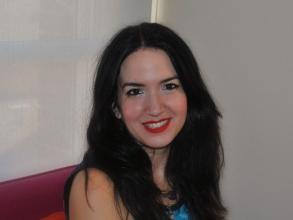
Sara Lumbreras Sancho
Sara Lumbreras is a professor at the ICAI School of Engineering of the Universidad Pontificia Comillas, where she graduated in 2006 as the Graduation Prize Winner. She is currently deputy director of Research Results at the Technological Research Institute and manages the chair of Science, Tecnology and Religion together with Jaime Tatay. She is the author of more than seventy academic publications and has directed or participated in more than twenty projects with private companies and public institutions. Her research focuses on the development and application of decision support techniques to complex problems. She works with classical optimization techniques such as Benders decomposition, heuristics and Artificial Intelligence. She has developed applications in the energy sector (mainly in network design), in the health sector and in finance. She also has five years of experience in the private sector (JPMorgan London). She develops a line of research in philosophy of technology and the implications of artificial intelligence in anthropology. She is a Global Shaper of the World Economic Forum and a Marshall Memorial Fellow.
Prof Sanjay Manohar
Sanjay Manohar is a computational neuroscientist and clinical neurologist at the Nuffield Department of Clinical Neurosciences and Department of Experimental Psychology, University of Oxford. His group studies human motivation: how our desires drive us to do hard things. He works on how this can be modelled in computers, and how it goes wrong in disease, resulting in apathy.
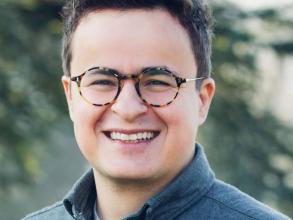
Dr Nathan Mladin
Nathan is a Senior Researcher at the Christian think tank Theos in London, an Associate of the UK's AI, Faith and Civil Society Commission and the co-founder of Faithbase, an AI and tech ethics consultancy based in Romania. His research, speaking and writing focus on technology ethics/ AI, and theology of culture. He holds a PhD in Systematic Theology from Queen's University Belfast and is the author of several publications, including Data and Dignity: Why Privacy Matters in the Digital Age (Theos, 2023) and AI and the Afterlife: From Digital Mourning to Mind Uploading (Theos, 2024).
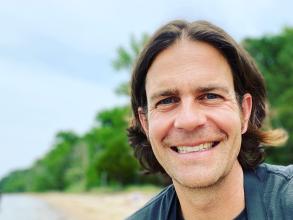
Dr Cyrus Olsen
Dr Olsen is Associate Professor of Theology/Religious Studies at The University of Scranton and Affiliate Faculty for Health Humanities. A graduate of the Comparative History of Ideas Program at The University of Washington, and Systematic Theology from The University of Oxford, his research and teaching focus on religion and society from 1750-Present. In addition to his primary academic appointment, Dr Olsen is also Research Fellow for AI&Faith, and an Affiliate Research Fellow through a Templeton World Charity Foundation Grant at the Human Network Initiative, a subsidiary of the Dhand Lab specializing in Neurology at Brigham and Women's Hospital, Harvard Medical School, located in Cambridge, MA.
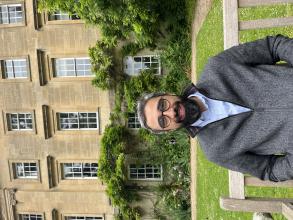
Dr Muhammad Sami
Muhammad Sami is a Fellow in Philosophy and Theology at Tabah Foundation (Cairo, Egypt). Previously, he was a Research Fellow at the Oxford Centre for Islamic Studies and a lecturer that the Faculty of Theology and Religion at the University of Oxford, where he completed his DPhil. His research interests are in Islamic Philosophy, Philosophy of Religion, and Political Philosophy and his research is largely informed by the tradition of Philosophical Sufism. Through what he describes as the Sufi ideals of truthfulness, he is seeking to formulate conceptions of authenticity, autonomy, and inner life that can help us navigate the challenges AI poses to some of our deepest values.
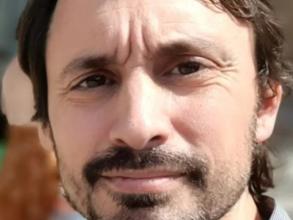
Dr Ignacio Alberto Silva
Dr Ignacio Silva is Research Fellow at the Philosophy Institute, Universidad Austral, and an Associate Member of the Faculty of Theology and Religion, University of Oxford. His main research interests are the philosophy of religion, in particular issues concerning divine providence in relation to what the natural sciences have to say about indeterminism in nature. He worked at the IRC 2010-2017 co-directing with Dr Andrew Pinsent the Centre's projects for Latin America.
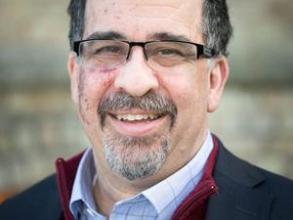
Dr Stan Rosenberg
Stan Rosenberg founded and directs Scholarship and Christianity in Oxford (SCIO). He is a member of the Faculty of Theology and Religion at the University of Oxford, teaching early Christian history and doctrine and science and religion. He is a Fellow of the International Society for Science & Religion. His research and teaching interests focus on Augustine's works, early Christian cosmology and its relationship to Greco-Roman science, culture and philosophy, and the interplay between intellectual and popular thought in this period. Recent research has led to articles on early Christianity and Greco-Roman science, and the intersection of preaching, popular religion, and the development of doctrine in late antiquity. His most work has included creating and directing SCIO's grant funded project, Bridging the Two Cultures of Science and the Humanities, and organizing a set of consultations around a grant funded project on Darwin and Christian theology which led to the book, Finding Ourselves after Darwin: Conversations on the Image of God, Original Sin, and the Problem of Evil. Rosenberg is on the editorial board of the journal, Religions. Since 2002 he has directed and co-directed multiple science and religion projects in Oxford funded by the John Templeton Foundation, the Templeton Religion Trust, The Templeton World Charity Foundation, The Blankemeyer Foundation, and the BioLogos Foundation. He also directs the Logos programme offered by SCIO for postgraduates working in ANE, OT, NT and Biblical reception history. He is on the advisory council of the BioLogos Foundation and was on the International Advisory Board of the Museum of the Bible, advising the latter on science and the Bible, and patristics.
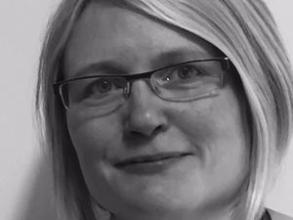
Patricia Shaw
Patricia Shaw LLB(Hons), LLM, FRSA, MIEEE, is CEO of Beyond Reach Consulting Limited based in the UK and advises globally on Responsible AI (AI/data ethics, policy, law, and governance), and Corporate Digital Responsibility. Patricia has over 20 years' experience as a lawyer in data, technology and regulatory/government affairs and is a registered Solicitor in England and Wales, and the Republic of Ireland. She has authored and edited several works on law and regulation, policy, ethics, and AI. She has a particular interest in algorithmic bias, autonomous decision making in high impact AI systems, privacy, and fairness, and how AI impacts on gender, religion, and belief. Her focus has predominately been areas where there is high risk impact on society such as in Finance, Health, and Education (including the impact on the future of work). Trish is an expert advisor to the Council of Europe on Generative AI and the impacts of Freedom of Expression (MSI-AI), is an independent expert on the European Commission's General Purpose AI Code of Practice working group concerning AI Governance, on the project advisory board to the Global Partnership on AI Group concerning Transformative AI policy for Gender, Diversity and Equality, sits on the UKAS Artificial Intelligence Technical Advisory Committee, and represents Equinet in the making of the fundamental rights centred EU AI Act standards with Cen/Cenelec.
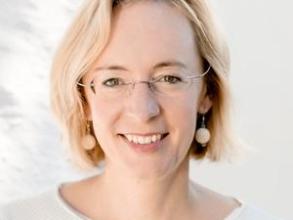
Prof Sarah Spiekermann Hoff
Sarah Spiekermann Hoff holds the Chair of Information Systems & Society at Vienna University of Economics and Business (WU). She is a scientist, lecturer and author in the field of digital ethics, IT innovation, digital privacy and future studies. After advisory functions in various committees of international organizations such as the EU Commission or the OECD, she vice-chaired the development of the first global standard for ethical IT system design (ISO/IEEE 24748-7000) for the IEEE from 2016-2021. She has written two re-known textbooks: 'Value-based Engineering' (VBE) (De Gruyter, 2023) and 'Ethical IT Innovation' (Tailor & Francis, 2016), the non-fiction book 'Digitale Ethik' (Droemer, 2019; forthcoming in English in 2025) and over 100 scientific articles. In 2024, she was ranked among the top 2% cited scientists in her field worldwide by Stanford University. Sarah founded the VBE Academy in 2024, which provides a global education program for cyber ethics professionals.
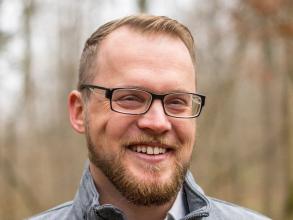
Dr Daniel Wilson
Daniel is the founder and CEO of XRI Global, a company committed to making AI accessible to speakers of every language. He has an MDiv in Biblical and Theological Studies, an MA and PhD in linguistics, and has led his company to build AI models for dozens of low-resource languages in over 25 countries. He lived abroad for 5 years in the Republic of Georgia and Russia and has extensive experience in linguistic documentation of endangered languages. Daniel is intimately aware of the multilingual complexity of the developing world and is passionate about bringing the energy and innovation of a technology company to solving this global infrastructure challenge.
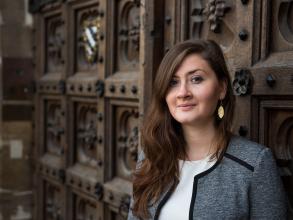
Dr Mari van Emmerik
Dr. Mari van Emmerik is a Junior Research Fellow in Religion and the Frontier Challenges at Pembroke College, University of Oxford, and a Research Associate at the Faculty of Divinity, University of Cambridge. She earned her doctorate in Theology and Religion from Oxford in 2022, supervised by Professor Alister McGrath. Her academic background includes postgraduate degrees in Cognitive Science, Linguistics, and Science and Religion she received as a Fulbright Scholar in the US and a Clarendon Scholar at Oxford. Her current project at Pembroke explores how Christian incarnational theology and the embodied cognition framework can challenge the epistemic monoculture in AI development. At Cambridge, she co-leads the John Templeton Foundation-funded project "Awe-some Spirituality," which investigates the theological and psychological dimensions of spiritual yearning among the nonreligious. She has taught Theology and Science at Cambridge and actively contributes to public discussions on religion, consciousness, and ethics.
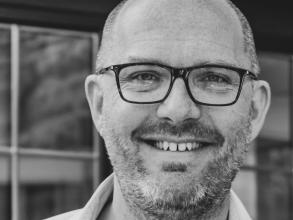
Dr Oliver Wright
After fifteen years as a property lawyer in London, Oliver Wright returned to Oxford to study philosophical theology and to pursue ordination in the Church of England. His doctorate, 'The Performativity of Christian Discourse: A Theological Theory of Language as Act' was successfully completed in April 2025 after seven terms of study. His recent peer-review publications include essays on Giorgio Agamben, Kierkegaard, Ricoeur and Rowan Williams, lex orandi lex credendi, and a reading of Romans 14-15 inspired by Richard Hays. He was ordained deacon in the Church of England in July 2025, and in October 2025 will take up a post as Junior Research Fellow in theology and AI at Pembroke College, Oxford.
Preparatory materials
Prior to the workshop, all participants will receive a number of documents as preparatory reading:
- a framing document on a professional commitment for AI practitioners and lessons to be drawn from the medical profession
- a theological background document
- a summary of the salient points from the previous workshops
- a brief reading list of published papers and materials relevant to the workshop
- an initial draft of the Oxford Oath, so that participants can work together on a concrete proposal
Practical matters
All participants in the workshop will be provided with:
- lunch and dinner (and morning and afternoon refreshments) on each of the two days of the workshop
- the option of accommodation in Oriel College, near to the conference venue, from the Sunday evening through to the Wednesday morning
Participants will need to provide for incidental costs arising.
Outputs
The main outputs from the workshop will be:
- the Oxford Oath itself, namely a theologically-informed professional commitment for AI practitioners (scientists, engineers, and other industry participants), suitable for a broad group including secular people
- a theological rationale for the Oxford Oath, providing the ethical reasoning which underlies the commitment
There is also an intention to publish a journal special edition, which will include other materials developed in relation to the workshop.
Workshop format
The primary aim of the workshop is to collaborate on the Oxford Oath and its theological rationale, and so the bulk of the time across the two days will be spent in group work. There will be six short invited talks across the two days (three each day), all designed to stimulate conversation and constructive debate. The remainder of the time will be spent in structured group activity, facilitated by the organisers, building the theological rationale and the Oxford Oath itself.
All participants will be committed to engaging with all the sessions across both days of the workshop.
Promulgation
After the workshop, the Oxford Oath and theological rationale will be promulgated through a number of parallel routes:
- direct connection with industry leaders, allowing the professional commitment to be tested out with AI practitioners
- scholarly publication, most likely in an edited journal special edition
- through press and social media distribution
Follow up
The organisers recognise that the field of AI is fast-moving, and our intention is to engage with AI scientists, engineers, and industry participants over time to obtain feedback on how well the Oath is functioning in their practice.