OCTAI workshop 2: Initial theological proposals
Presenters
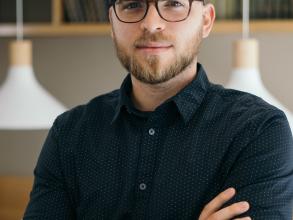
Oliver Dürr, Survey of the field and areas of theology and AI we should not focus on
Dr. Oliver Dürr is the Director of the Center for Faith & Society at Fribourg University in Switzerland as well as Post-Doc Researcher at the "Digital Religion(s)" URPP of the University of Zurich. He is a theologian and historian (graduated both with highest honors), book author, film director and podcaster. His academic research focusses on the theology of technology, the future of anthropology and the ways of life that lead to a flourishing life - biologically, socially and spiritually. He heads the research network focused critically on "Contesting Computer Anthropologies" and constructively on developing the contours of an "Inclusive Humanism". Among his publications is an interdisciplinary work program for the humanities engaging AI technologies. Next to his academic work, he engages in science communication efforts, most notably the documentary film and awareness campaign "The End of Humanity".
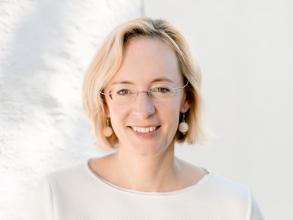
Sarah Spiekermann-Hoff, Scheler's ontology and ranking of values and other ethical theories in VBE & IEEE 7000
Sarah Spiekermann Hoff holds the Chair of Information Systems & Society at Vienna University of Economics and Business (WU). She is a scientist, lecturer and author in the field of digital ethics, IT innovation, digital privacy and future studies. After advisory functions in various committees of international organizations such as the EU Commission or the OECD, she vice-chaired the development of the first global standard for ethical IT system design (ISO/IEEE 24748-7000) for the IEEE from 2016-2021. She has written two re-known textbooks: 'Value-based Engineering' (VBE) (De Gruyter, 2023) and 'Ethical IT Innovation' (Tailor & Francis, 2016), the non-fiction book 'Digitale Ethik' (Droemer, 2019; forthcoming in English in 2025) and over 100 scientific articles. In 2024, she was ranked among the top 2% cited scientists in her field worldwide by Stanford University. Sarah founded the VBE Academy in 2024, which provides a global education program for cyber ethics professionals.
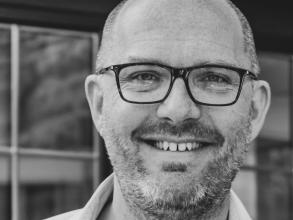
Oliver Wright, A fruitful and constructive vision for theologically-informed AI ethics
After a 15-year career as a lawyer, Oliver recently completed a DPhil at the University of Oxford on performative utterances and theological language. In October he will commence a Junior Research Fellowship at Pembroke College, Oxford, investigating AI using some of the philosophical and theological tools developed in the thesis.
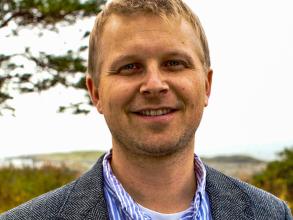
Michael Burdett, Proximate ethical concerns related to AI
Dr Michael Burdett is Associate Professor of Christian Theology at the University of Nottingham. He completed his DPhil in Theology at the University of Oxford, and worked in the aerospace and robotics industries for several years working with a firm that had contracts with NASA and JPL. He holds degrees in engineering, physics, and theology and has been given academic and professional awards in each field. He has been an advisor for the Church of England's Ethical Investment Advisory Group on AI and Big Tech and has helped lead grant projects totalling over ~£4 million on topics related to Christian theology, science and technology. He is a series editor for the Routledge Science and Religion series and his major works include Technology and the Rise of Transhumanism: Beyond Genetic Engineering (Grove, 2014), Eschatology and the Technological Future (Routledge, 2015) and Finding Ourselves After Darwin: Conversations about the Image of God, Original Sin, and the Problem of Evil (Baker Academic, 2018).
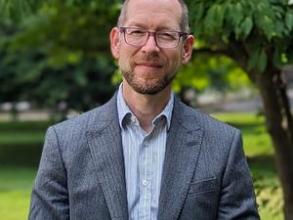
Andrew Davison, Interview and discussion
My first spell at Oxford was as an undergraduate reading Chemistry, followed by a DPhil in Biochemistry. I subsequently read theology at Cambridge. After a curacy in Southeast London, I started my theological teaching and research career in Oxford, as tutor in Christian doctrine at St Stephen's House, followed by a similar role at Westcott House in Cambridge. During that time, I studied a Cambridge PhD on understandings of finitude in Thomas Aquinas and John Duns Scotus. I moved from Westcott House to become the Starbridge Lecturer (later Professor) in Theology and Natural Sciences at the University of Cambridge (2014-24). From 2022-24, I was a visiting fellow at the Center of Theological Inquiry in Princeton, New Jersey. I became Regius Professor of Divinity at Oxford in September 2024, a post that is based at Christ Church, where I am also a residentiary canon of the cathedral.
Kelvin Chong, Ethical design for virtue and to avoid ethics washing
Kelvin C.M. Chong is an avid technologist turned theologian. He is currently an assistant professor of Systematic Theology at Singapore Bible College with two concurrent AI projects in collaboration with The Polytechnic University of Hong Kong (AI tutor - Socratic approach) and Nanyang Technology University, Singapore (Virtuous AI design - prototype). His research focuses on the integration of Patristic studies and technology, especially AI.
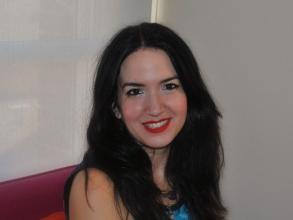
Sara Lumbreras Sancho, Imago dei and AI: theological insights for chatbot ethics
Sara Lumbreras is a professor at the ICAI School of Engineering of the Universidad Pontificia Comillas, where she graduated in 2006 as the Graduation Prize Winner. She is currently deputy director of Research Results at the Technological Research Institute and manages the chair of Science, Tecnology and Religion together with Jaime Tatay. She is the author of more than seventy academic publications and has directed or participated in more than twenty projects with private companies and public institutions. Her research focuses on the development and application of decision support techniques to complex problems. She works with classical optimization techniques such as Benders decomposition, heuristics and Artificial Intelligence. She has developed applications in the energy sector (mainly in network design), in the health sector and in finance. She also has five years of experience in the private sector (JPMorgan London). She develops a line of research in philosophy of technology and the implications of artificial intelligence in anthropology. She is a Global Shaper of the World Economic Forum and a Marshall Memorial Fellow.
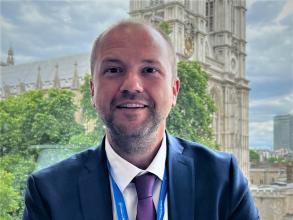
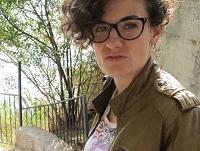
Saša Horvat and Tanja Horvat, Artificial Intelligence, neurodiversity, and trust
Saša Horvat, Ph.D. is a professor of philosophy at the University of Rijeka, Croatia, affiliated with the Faculty of Medicine and the Faculty of Health Studies. His work focuses on the intersection of science and religion, neurophilosophy, theology, and autism. He leads two research projects on AI, neurodiversity, and the neuroscience of religion, and will soon begin a four-year project on assistive robotics and autism. He founded and chairs Rijeka Scientific Bridges, an annual interdisciplinary conference. He is the author of Why Do We Believe in God? (2023), Heidegger's Notion of Oblivion (2016), and co-editor of Overcoming Reductionism (Springer, 2024).
Tanja Horvat, M.Th. is a Catholic religion teacher specializing in education for students on the autism spectrum. She works at the Center for Autism in Rijeka and co-led the international project Religious Experience of Persons on the Autism Spectrum. She contributed to the national curriculum for students with autism and is currently involved in its implementation. She is also part of a four-year research project on assistive robots and autism, where she will integrate robots into religious education and evaluate their impact.
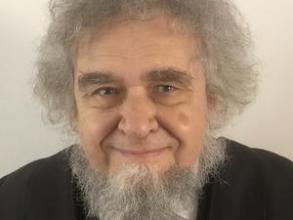
Paul Fiddes, Divine love and the response of Artificial Intelligence
Paul S. Fiddes took first class degrees in English Language and Literature (1968) and in Theology (1970) at the University of Oxford (St. Peter's College), followed by a D.Phil from Oxford (1975), and was awarded the D.D. of the University of Oxford for published work in 2004. At Regent's Park College, Oxford, he was successively Research Fellow in Old Testament and Hebrew (1972-75), Fellow in Christian Doctrine (1975-89), Principal (1989-2007), Professorial Research Fellow and Director of Research (2007-2018) and Senior Research Fellow (2018 to the present). He was also Lecturer in Theology at St. Peter's College, Oxford (1979-85). He was Chairman of the Board of Faculty of Theology of the University of Oxford from 1996-98, and received the title of Professor of Systematic Theology from the University of Oxford in 2002. He is Doctor Honoris Causa of the University of Bucharest, and Honorary Fellow of St. Peter's College, Oxford. He was elected a Fellow of the British Academy in 2020. He was ordained as a minister in the Baptist Union of Great Britain in 1972, and has extensive ecumenical concerns, including being a Canon Emeritus of Christ Church Cathedral, Oxford and Prebendary of St Endellion in North Cornwall.
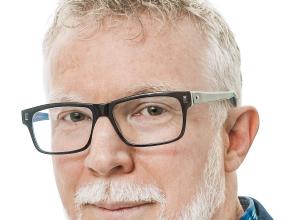
Jeffrey Bishop, Oath-making as sacred bond: lessons from medicine for the pharmakon of AI
Jeffrey P. Bishop, MD, PhD is Professor of Philosophy and Professor of Theological Studies at Saint Louis University (a Jesuit University in the US), where he holds the Tenet Endowed Chair in Bioethics. Bishop is the author of two books: The Anticipatory Corpse: Medicine, Power, and the Care of the Dying(named the most important book published in 2011, by the Australian Broadcasting Corporations Religion and Ethics Page) and Biopolitics After Neuroscience: Morality and the Economy of Virtue (coauthored with M. Therese Lysaght and Andrew A. Michel, and the winner of the Expanded Reason Award in 2021). Bishop's philosophical work sits at the intersection of the philosophy of technology, science, and culture, exploring the metaphysics and ethics of technological devices in relation to culture and the human person.
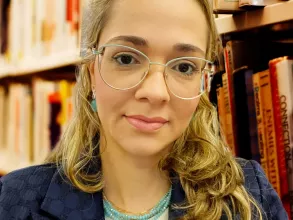
Miriam Leal, Theological dimensions of the miracles: a phenomenological and AI-based analysis in health context
Physician from the School of Health Sciences. Pediatrician from the Maternal and Child Hospital of Brasilia. Physician at the Neonatology Unit at Maternal and Child Hospital of Brasilia. Professor of pediatrician and realistic simulation in University Center of Brasilia. Member of the Research Ethics Committee of University Center of Brasilia. Master's in Health Sciences from School of Health Sciences. PhD student of Psychology at the Catholic University of Brasília. Coordinator of the Health, Science and Spirituality Integral Group.